
Sports Injury Treatment Sydney CBD
Runners, lifters, team-sport players and weekend athletes make up a large part of our clientele. We assess the injury and the movement pattern behind it, settle the tissue with hands-on treatment, then rebuild strength and load tolerance so you get back to training and stay there.
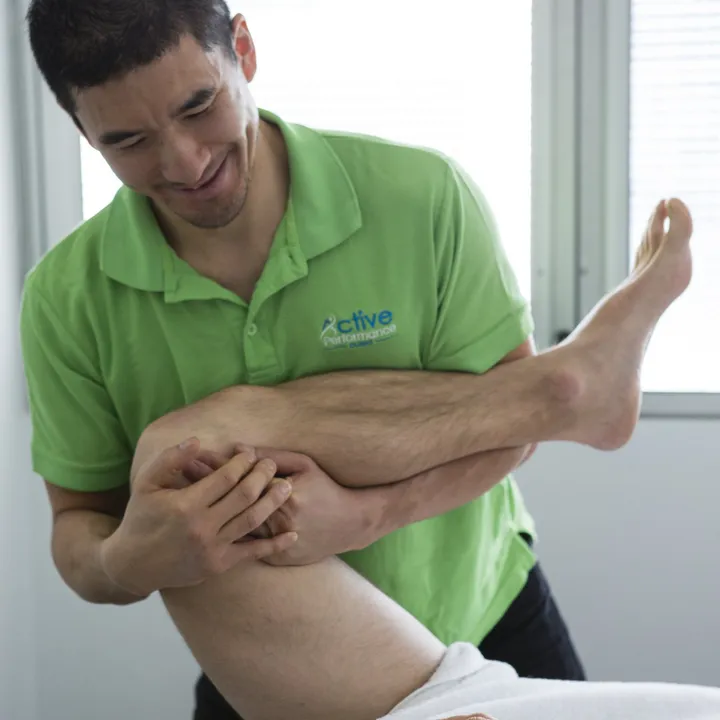
How we treat sports injuries
The assessment covers how the injury happened, what stage of healing it is at, strength and flexibility tests side to side, your running or lifting mechanics, and what your training load looked like in the weeks before. In the early days the priority is protecting the tissue, gentle movement and clear advice. From there, remedial massage and myofascial release around the injured area, dry needling for protective spasm, cupping and red light therapy help the tissue settle and recover between sessions.
The part that stops the injury coming back is progressive loading through the exercise program: isometric holds first, then eccentric strengthening such as Nordic curls for hamstrings and heel drops for the calf and Achilles, hip and glute strength, and a graded return to running, jumping and sport with clear milestones. Prevention afterwards is mostly strength and sensible increases in training load.
Common patterns we see in the CBD
Lunchtime runners who doubled their distance for a city fun run and developed shin or ITB pain, gym members with glute and calf tightness after a block of heavy lower body work, social football players with a hamstring that keeps returning, and cyclists with outer knee pain. If you are in pre-season or building for an event, come in early: a screening session finds the weak links before they become injuries.
Sources and further reading
- Sports injuries, healthdirect Australia
- Sprains and strains, healthdirect Australia
- Sports injuries, NHS
General information from the Active Performance Clinic team. Last updated 27 October 2026.
Sports conditions: symptoms and causes
| Condition | Common symptoms | Common causes |
|---|---|---|
| Hamstring strain | Sudden pain at the back of the thigh during sprinting or kicking, tightness, bruising with larger tears, pain on stretching or bending the knee against resistance. | High-speed running, overstriding, fatigue, a previous hamstring injury, hamstrings that are weak relative to the quads, or an inadequate warm-up. |
| Calf strain | Sharp pain in the calf, sometimes a kick or pop sensation, difficulty pushing off, tenderness and swelling in the inner calf. | Sudden acceleration or change of direction, running on hard surfaces, fatigue, tight or weak calf muscles, or a jump in training volume. |
| Groin (adductor) strain | Pain on the inner thigh or groin with kicking, sprinting, side-stepping or squeezing the knees together, and stiffness after sitting. | Rapid changes of direction in football and soccer, overstretching, weak adductor and hip muscles, or high training load with little recovery. |
| Shin splints (medial tibial stress syndrome) | A diffuse ache along the inner shin that starts during or after running and eases with rest, tender to press along the edge of the bone. | A sudden increase in running distance or intensity, hard surfaces, worn shoes, flat feet or poor calf and hip control. |
| Iliotibial band (ITB) syndrome | Sharp or burning pain on the outside of the knee that starts at a predictable point into a run and settles with rest, sometimes with pain at the outer hip. | Repetitive knee bending in running and cycling, weak hip abductors, a sudden training jump, downhill running or a crossover running style. |
| Gluteal and piriformis pain | A deep buttock ache, sometimes with pain or tingling down the back of the leg, worse with sitting, stairs or running. | Overloaded gluteal tendons or a tight, irritated piriformis muscle, often from a jump in training, weak hips, or long periods of sitting after exercise. |
General information only. It does not replace a diagnosis. Seek urgent medical care for pain after significant trauma, or pain with fever, numbness, weakness, or changes to bladder or bowel function.
Treatments we use for sports injuries
Sports injuries FAQs
How soon after a strain should I come in?
The first two to three days after a muscle strain are for protecting the area and gentle movement. Hands-on treatment is most useful once the sharp pain settles, usually from day three onward. If you are unsure, book in: the assessment tells us what stage you are at, and early advice on loading prevents the common mistake of resting for too long.
Can I keep training with the injury?
Often yes, with changes. We help you find the level and type of training that keeps you fit without re-injuring the tissue, for example cycling or pool work during a calf strain, or upper body sessions while a hamstring recovers. The return-to-sport plan progresses as your strength tests improve.
Do you offer pre-event and post-event sports massage?
Yes. A light, stimulating session one to two days before a race or match and a recovery flush one to three days after are both available; see our sports massage page for timing and what to expect. Maintenance sessions between training blocks are the best way to catch tightness before it becomes an injury.
Do you treat teenagers?
We treat clients aged 16 and over. If you are booking for a 16 or 17 year old, a parent or guardian should make the booking.
Do I need a scan before I come in?
Usually not. Most strains and overuse injuries are assessed clinically. We will suggest imaging through your GP if the history or examination points to a larger tear, a bone stress injury or a ligament rupture.
When should I see a doctor instead?
Go to a doctor or emergency department if you cannot put weight on the leg, there is an obvious deformity, you heard a loud pop with rapid swelling, you have numbness or the limb is pale or cold, or a calf is swollen, hot and painful without a clear injury, which can be a clot.
Get sports injuries assessed in Sydney CBD
Book an initial appointment online in under a minute. New clients choose "Consultation and Initial Treatment".