
Headache and Migraine Treatment Sydney CBD
Most of the headaches we see in the CBD start in the neck, jaw and shoulders: long hours at a screen, clenching, stress and a stiff upper back. We work out where your headache is coming from, treat the muscles and joints that feed it, and give you a plan to stop it returning. Migraine is a medical condition we support alongside your doctor's care.
How we treat headaches
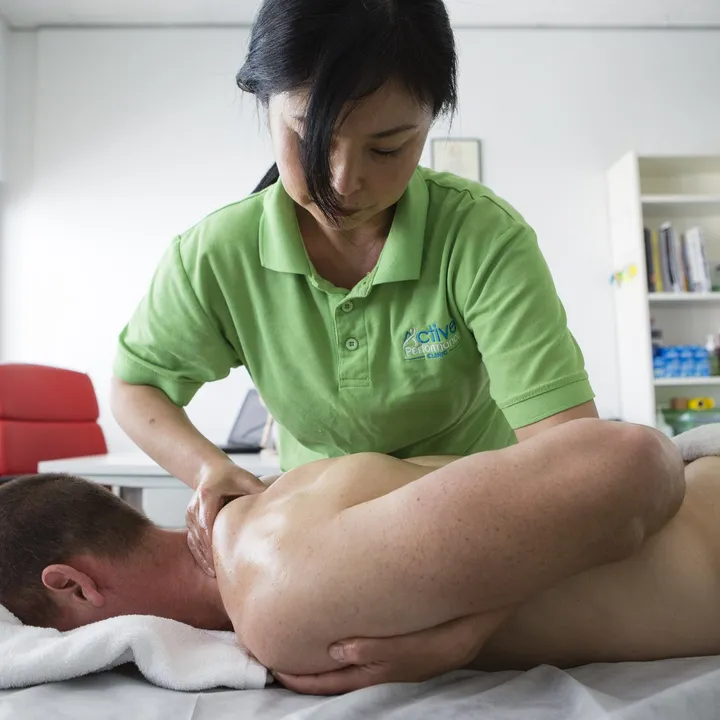
We start by working out which type of headache you have, because the plan is different for each. For tension-type and neck-related headaches the first appointment combines remedial massage and myofascial release through the neck, shoulders and base of the skull, dry needling of active trigger points in the upper trapezius, suboccipital and jaw muscles, and gentle mobilisation of the upper neck and mid back. Most people notice the familiar ache ease during the session.
The second part is stopping it coming back. You leave with a short exercise program: deep neck flexor and shoulder blade strengthening, mid-back mobility, a chest stretch, and specific advice on monitor height, phone use, jaw habits and sleep position.
Common patterns we see in the CBD
Headaches that build through the afternoon at a desk, one-sided headaches that start at the base of the skull after a long commute, people who wake with a headache and a sore jaw, and migraine sufferers whose neck tightens in the days before an attack. Each needs a slightly different plan, which is why we assess before we treat.
Working with your doctor
If your headaches are frequent, changing, or come with other symptoms, we will ask you to see your GP first. Migraine often needs medical management, and we are glad to work alongside medication or neurology care to reduce the muscular triggers.
Sources and further reading
- Headaches, healthdirect Australia
- Tension headache, healthdirect Australia
- Migraine, healthdirect Australia
- Tension-type headaches, NHS
General information from the Active Performance Clinic team. Last updated 27 October 2026.
Head conditions: symptoms and causes
| Condition | Common symptoms | Common causes |
|---|---|---|
| Tension-type headache | Dull, pressing or tightening pain on both sides of the head, often described as a band around the head, with tender scalp, neck and shoulder muscles. Not usually made worse by activity. | Sustained muscle tension in the neck, jaw and scalp from posture, stress, screen time, poor sleep, eye strain or teeth clenching. |
| Cervicogenic headache | Pain that starts in the neck or at the base of the skull and spreads to one side of the head, behind the eye or into the temple; neck stiffness; worse with sustained neck postures or certain movements. | Irritation of the upper neck joints, discs or muscles from posture, whiplash, arthritis or a stiff upper back. |
| Migraine (muscular contributors) | Moderate to severe throbbing pain, often one-sided, lasting hours to days, with sensitivity to light and sound, nausea and sometimes visual aura. Neck pain is common before and during attacks. | A neurological condition with genetic and hormonal factors. Neck and shoulder tension, poor sleep, stress and missed meals are common triggers that hands-on treatment and self-care can help manage. |
| Occipital neuralgia | Sharp, shooting or electric pain at the back of the head and scalp, sometimes behind the ear or eye, with tenderness at the base of the skull. | Irritation of the occipital nerves where they pass through tight suboccipital and upper neck muscles, after whiplash or from prolonged neck flexion. |
| Jaw-related (TMJ) headache | Headache in the temples or around the ears, jaw ache or clicking, pain on chewing, waking with a sore jaw or a tight face. | Clenching and grinding, long dental procedures, stress and tight masseter and temporalis muscles that refer pain into the head. |
General information only. It does not replace a diagnosis. Seek urgent medical care for pain after significant trauma, or pain with fever, numbness, weakness, or changes to bladder or bowel function.
Treatments we use for headaches and migraines
Headaches and migraines FAQs
Can massage help migraines?
Massage does not cure migraine, which is a neurological condition, but many people find that treating neck and shoulder tension reduces how often attacks are triggered and how bad the neck pain around them is. We work alongside your GP's or neurologist's plan, not instead of it.
How do you know whether my headache is coming from my neck?
We test the movement of the upper neck joints and press on specific muscles at the base of the skull, in the jaw and across the shoulders. If that reproduces your familiar headache, the neck and those muscles are a likely contributor, and treatment usually helps quickly.
When should I see a doctor instead?
See a doctor urgently for a sudden, severe headache that peaks within minutes, a headache with fever and a stiff neck, a headache after a head injury, or one with confusion, weakness, numbness, slurred speech or vision loss. See your GP for a new headache pattern if you are over 50, or for headaches that keep getting worse. We assess first and refer whenever needed.
Get headaches and migraines assessed in Sydney CBD
Book an initial appointment online in under a minute. New clients choose "Consultation and Initial Treatment".